Showing posts with label scribal. Show all posts

Wednesday, May 6, 2020


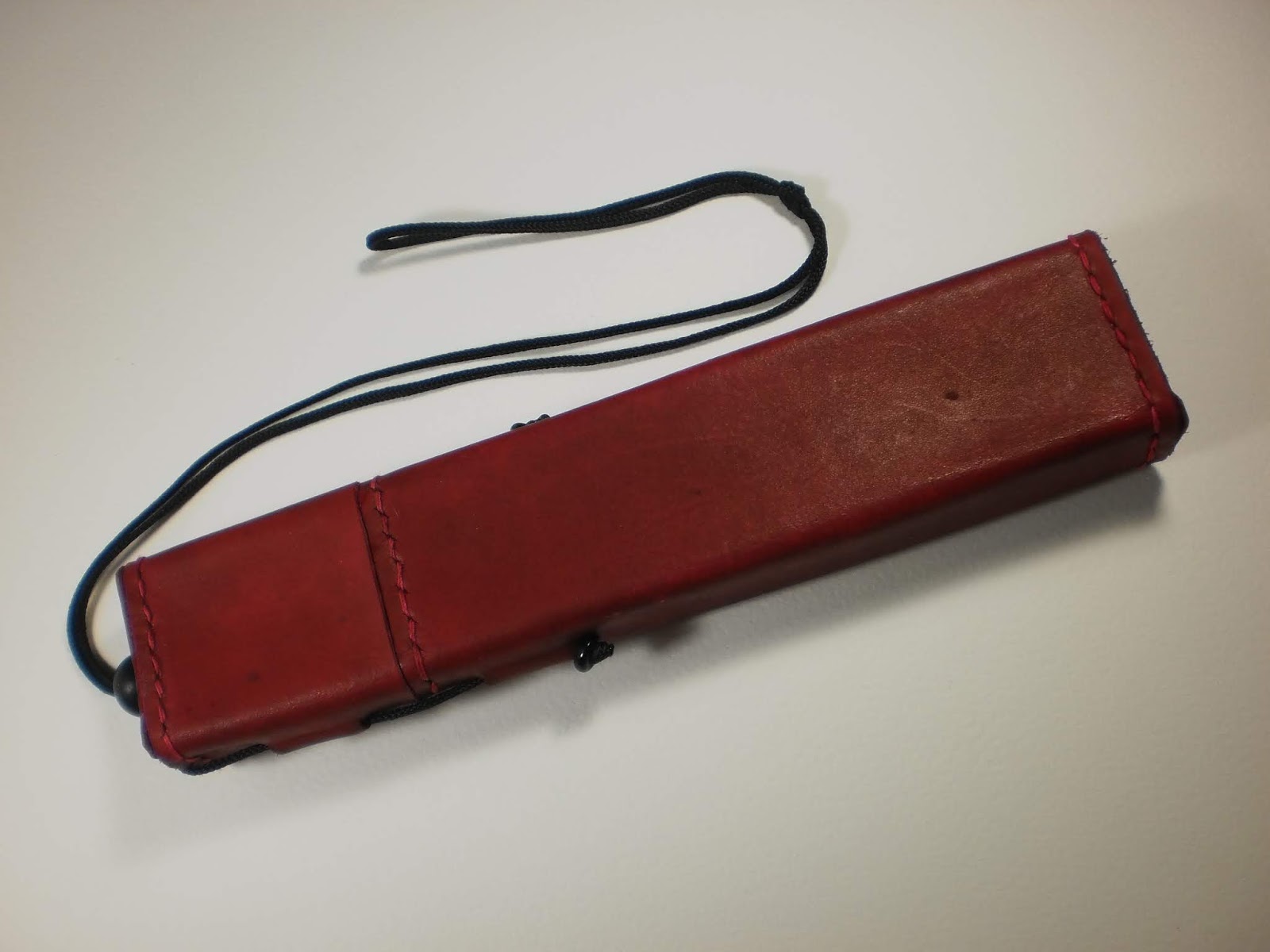
Hand made leather penners

See more at facebook.com/ArtCindyEllenBaker


Or email me
EllenoftheScholars@yahoo.com


Red Penner $69.00 about 8 inches long, 2 inches wide, 1/2 inch deep.

Lots of room for your scribal tools.


Friday, June 22, 2018

 Ink-Making Equipment
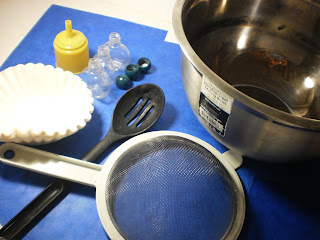
 
Some of the basics.
First - DON'T cross the streams! This is a good safety tip. Keep your ink-making equipment separate from your cooking equipment. They may look the same, but get some cheap gear & keep it just for making ink. You don't want to prepare food with any of this stuff after it's been in ink. That bowl in the upper right? It has a permanent black/brown stain which would absolutely contaminate your food.

That said, cheap is good! If you can't find a sauce pan or large metal bowl at the dollar store, use a large soup can or a #10 can of pudding (emptied & cleaned, mmm pudding). Not all ink recipes call for heating the ink, but a metal container can go on the stove if necessary. Hmm, hot pads would also be good. You will probably need two large-ish containers. One for the un-strained ink and one to strain the filtered ink into. It's a real nuisance to try to strain anything while you're pouring it into tiny ink bottles. You'll also need some kind of spoon to stir things, a strainer to remove the big lumps, coffee filters to remove the little lumps, tiny little bottles to store your finished ink (with water-tight caps), a funnel to get the ink into the tiny little bottles, and probably a hammer (not shown.) The hammer is for smashing up the oak galls. By the way, you can get tiny funnels like this one in the sporting goods section. They're used to fill camp stoves that use white gas instead of propane tanks. Again, don't use the funnel for anything besides ink - not sure what it would do to your camp stove to get ink in your fuel.
****
A good tip from Hroswitha von Lippe, "Remember spills can be permanent." (Good idea to cover surfaces with plenty of newspaper or paper towels just in case!)
Another from Ian the Green, "I recommend linen for filtering. It goes much faster. I also believe it does a better job in my opinion than the coffee filters." (Coffee filters do take a long time. I'll see if I have any linen to use this time around.)
****

I hope you had a chance to follow links from my last blog & read through some of the recipes. I will probably be using one of the simpler recipes this time. One that doesn't involve cooking the ink, additional ingredients, or letting the galls sit long enough to ferment.

***

I've posted another link to a book absolutely bursting with ink information. You'll have to contact them by email or phone (listed on the web site) rather than purchasing online, but it's well worth it at $8.95. "Manuscript Inks" by Jack C. Thompson, available from Caber Press:
http://home.teleport.com/~tcl/mi.htm
Thursday, June 21, 2018

You will also need 
WATER 
to make your ink.

Ink from the last batch I made.
If your ink turns out a funny color, or does something else weird, you might have contaminants in your water. My hometown sends out a water quality report once a year, so I pretty much know there's not much in there that will affect my ink. If you've got well water, or just aren't sure what's in your local water, maybe use distilled or bottled water. I've also seen some ink recipes that call for wine or some other liquid. I haven't tried any of those yet, so I'm sticking with tap water this time.

Here's a little online booklet from Yale University containing medieval ink recipes:
https://travelingscriptorium.files.wordpress.com/2014/06/scopa-recipes-booklet_web-june-2014.pdf

There is a lot of information about making ink and some recipes here:
https://irongallink.org/igi_indexc33a.html

Ian the Green has been making ink for quite some time. Here's a link to his blog:
https://scribescribbling.wordpress.com/

More info about medieval ink at Stefan's Florilegium Archive:
http://www.florilegium.org/

There are tons of ink recipes online, and even more in actual treatises from the middle ages. If you find any good recipes that have worked for you, please share!

Monday, June 18, 2018

I'm down to 2 last bottles of handmade iron gall ink. 
Time to make a new batch of ink! 

If you kids want to follow along, https://irongallink.org/ has TONS of information on ink & recipes.
Ian's blog also has lots of info along with his personal experiences in ink-making:
https://scribescribbling.wordpress.com/

Not sure which recipe I want to try yet, but I'm collecting the materials needed. The first ingredient is
Oak Galls

An oak gall is a growth on an oak tree caused by insect damage. Tannic acid is concentrated in these galls and is the first basic ingredient in this type of ink. 

Aleppo oaks (Quercus infectoria) are supposed to produce the best ink - having a larger amount of tannic acid in the galls than other oaks. Galls from this species of oak are caused by wasps laying eggs in the tree. The resulting galls have been used in ink-making for centuries. 

Image result for Quercus infectoria
Aleppo oak tree - native to Greece & can be found in parts of southern Europe.
If you look closely at oaks in your area, you may also see lumps or round growths caused by similar insect damage. Several years ago, I made a small batch of ink from oak galls collected in Missouri. It was a good solid black ink, so feel free to experiment. (You may want to check with the owner of the oak tree(s) before you harvest galls. Might be a little embarrassing to be charged with trespass or property damage in your quest for ink.) I have no idea how to measure the amount of tannic acid in a given batch of oak galls. You might have to adjust your recipe if you're using galls from another species of oak.

SOURCES FOR OAK GALLS
Kremer Pigment sells aleppo oak galls: http://shop.kremerpigments.com/en/
Ancient Earth Pigments also sells them: https://www.ancientearthpigments.com/product/aleppo-gallnuts/

Yay! Oak galls.